Pulse
⛽ Energy 🌾 Inflation 💹 Recovery
A week of rising inflation, higher wheat prices and a widening trade deficit, balanced by stronger exports, improving external financing prospects and a sharp rally at the PSX. Meanwhile, energy security, refinery upgrades and global tensions remain key themes to watch as we head into the new week.
Another Week, Another Pulse!
The Middle East remains at the centre of global attention, with the conflict involving Iran continuing to put pressure on markets, energy supplies and geopolitics. The US is reportedly asking its defence industry to ramp up production as weapons stockpiles come under pressure, while President Donald Trump has indicated that Washington is currently focusing more on economic pressure than negotiations with Tehran. Iran, meanwhile, says direct talks cannot resume until the US honours commitments from an interim agreement reached in June. The situation could become even more complicated if the Strait of Hormuz is disrupted, with Iran laying out conditions for reopening the vital shipping route. Adding to the uncertainty, Yemen’s Houthi group has claimed new attacks on Saudi forces and energy infrastructure, raising concerns that the conflict could spread further through regional proxy groups.
For Pakistan, the week brought a mixed bag of economic signals. Inflation picked up again during the first week of August, with weekly inflation rising 0.28% and annual inflation reaching 9.29%. Consumers are also feeling the pressure at the grocery counter, with wheat and flour prices continuing to rise. To bring prices under control, the federal government is planning to import one million tonnes of wheat. While the move could help increase supply and ease prices, it also highlights the continuing pressure on food inflation and household budgets.
At the same time, the State Bank of Pakistan’s foreign exchange reserves increased by $13 million to $17.04 billion as of July 31. The bigger concern came from trade, however. Pakistan’s trade deficit reached almost $4 billion in July, widening 25% year-on-year as imports climbed to $6.9 billion. While imports can reflect stronger economic activity, the gap also highlights the pressure Pakistan continues to face in managing its external accounts.
There were some encouraging signs on the growth front. Cement dispatches rose 6.02% in July, reaching 4.476 million tonnes compared with 4.222 million tonnes a year earlier. Oil marketing companies also had a strong month, with sales reaching 1.5 million tonnes, up 23% year-on-year and 20% from June. Meanwhile, Pakistan’s services exports increased 18.81% during FY26, with the IT sector once again playing a major role. These numbers suggest that parts of the economy are gaining momentum even as external and inflationary pressures remain.
The government is also working on several measures aimed at strengthening the economy over the longer term. The Ministry of Commerce has allocated Rs10 billion for the textile, apparel and other export sectors under duty drawback and technology-upgradation schemes. However, the IMF’s condition regarding the sale of 20% of production from Export Processing Zone factories into the local market has raised concerns within the textile industry. Industry stakeholders argue that the restriction could hurt Pakistan’s role in the global textile circular economy and affect international charitable organisations that rely on these supply chains.
Energy continues to be another major issue. Industries in Hub are facing an acute water shortage despite the Hub Dam being nearly full, with business leaders claiming that industries, farmers and residents are not receiving their fair share of water. On the fuel front, petrol prices were reduced by Rs2.20 per litre and high-speed diesel by Rs1.50, bringing prices to Rs327.62 and Rs380.86 per litre respectively. However, taxes and duties still account for Rs114 per litre on petrol and Rs100 on diesel. The government is also discussing changes to the fuel pricing mechanism with the IMF, including a dynamic petroleum levy and a price stabilisation fund that could help cushion consumers from sudden global oil price movements.
Pakistan is also looking at ways to improve its energy security. The Petroleum Ministry is exploring an oil-storage arrangement with Saudi Arabia, Kuwait and Qatar, while the government has revived plans to restructure the country’s gas sector. Under the proposal, SNGPL and SSGCL could eventually be split into one national transmission company and four provincial distribution companies.
On the financing side, Pakistan has formally asked China to expedite refinancing of a $1.3 billion commercial loan, with funds expected later this month once the remaining conditions are finalised. The government also raised Rs170.98 billion through its latest Hybrid Sukuk auction, significantly exceeding the Rs125 billion combined pre-auction target and pointing to strong investor demand for government securities.
Pension reform is also moving forward. The government has signed agreements with 16 pension fund managers to operationalise the Defined Contribution Pension Fund Scheme for public-sector employees. The reform is intended to tackle the growing pension burden on government finances by moving towards a more sustainable system.
Meanwhile, the government is preparing to launch Vision Pakistan 2047 on August 12, International Youth Day. Ministries and government departments have been asked to outline their long-term development priorities as Pakistan begins thinking beyond immediate economic challenges and towards its longer-term national goals.
There is also movement in Pakistan’s financial markets beyond government borrowing. The SECP has established a high-level working group to review the country’s corporate debt market. The goal is to make corporate debt issuance faster and cheaper, simplify regulatory requirements and encourage the development of deeper long-term capital markets. For investors, stronger corporate debt markets could eventually mean more investment opportunities beyond traditional bank deposits and government securities.
The State Bank is preparing a new incentive scheme to encourage higher remittance inflows, while work continues on facilitating Pakistan’s transition towards Islamic banking. At the same time, oil refineries are pushing the government to finalise agreements under the amended Brownfield Refineries Upgradation Policy, warning that further delays could increase the financial burden on the industry.
So, what does all of this mean as we head into the new week? Globally, energy prices, the Iran conflict and the risk of a wider Middle East escalation remain the biggest things to watch. Locally, Pakistan’s story continues to be one of balancing growth with inflation, imports, energy security and external financing. There are positive signals from exports, cement, fuel consumption and government borrowing, but the widening trade deficit and renewed inflationary pressure show that the recovery still has plenty of challenges ahead. For investors, the key takeaway is simple: there is plenty happening beneath the surface, and understanding these developments can be just as important as watching the market itself.
📅 Key Events to Watch!
📆 August 11, 2026 💰 Pakistan's Debt and Liabilities Profile for June 2026
📆 August 11, 2026 🏦 Central Government Debt for June 2026
📆 August 13, 2026 💵 Foreign Exchange Reserves Update
📆 August 14, 2026 🛒 Weekly Sensitive Price Index (SPI) Release
Note: These dates are tentative and subject to change. Credits: Pulse by Capital Stake
STOCK MARKET
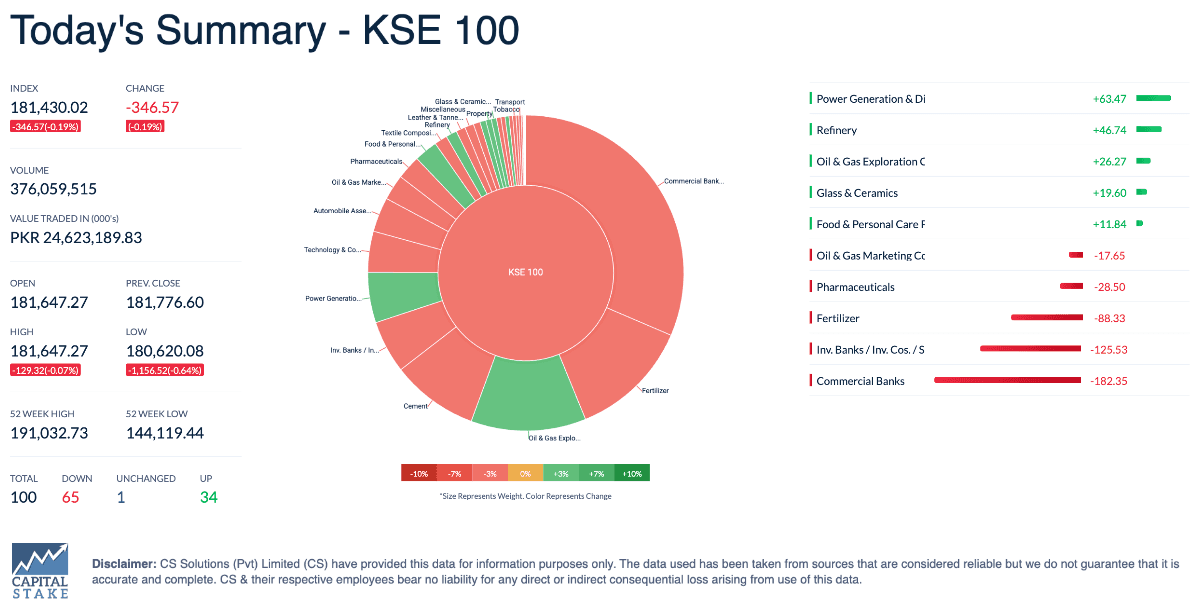
The Pakistan Stock Exchange had a strong week, with investor sentiment supported by easing oil prices, developments around the Middle East and improving prospects for Pakistan’s external financing. While profit-taking and global uncertainty kept some pressure on the market, they were not enough to stop the rally. The benchmark KSE-100 Index gained an impressive 5,336 points, or 3.03%, during the week, closing at 181,430. The strong performance suggests that investors are becoming increasingly optimistic about Pakistan’s economic outlook, although global developments and oil prices will remain important factors to watch in the coming week.
Credits: StockIntel
PSX Wants Bigger Stake in NCCPL
PSX is exploring the possibility of buying a larger stake in the National Clearing Company of Pakistan (NCCPL), which handles the clearing and settlement of trades made on the stock market. The move follows recent regulatory changes by SECP that have opened up more room for shareholding in clearing companies. For investors, a stronger PSX stake in NCCPL could mean closer coordination between the market and its clearing infrastructure, although it is still early days and no deal has been finalised yet. The next step will be for PSX to continue discussions with existing NCCPL shareholders, with any confirmed agreement expected to be disclosed publicly.
Tasdeeq IPO Fully Subscribed in Just 2 Seconds
Tasdeeq’s IPO got off to a flying start, with its book-building portion fully subscribed in just two seconds a strong sign of investor appetite. The company is offering 112.5 million shares at a price range of Rs1.90 to Rs3.00 per share, with institutional investors, foreign funds and high-net-worth individuals driving the demand. Tasdeeq is Pakistan’s first privately licensed credit bureau and, if listed, will become South Asia’s first publicly listed credit bureau. The strong response could signal growing investor interest in new listings, while the book-building process remains open until August 6 for eligible investors to place their bids.
FUNDS IN VIEW
Why could Pakistan’s construction boom be an opportunity for investors? Cement dispatches are rising, construction activity is picking up, and companies supplying the sector could be among the beneficiaries. But you don’t necessarily need to pick individual stocks to participate in the trend. Equity mutual funds already provide exposure to several companies linked to construction and materials.
We’ve broken down how Pakistan’s construction cycle could translate into investment opportunities, and which mutual funds are positioned to benefit.
📖 Read: From Bricks to Bucks: How to Profit from Pakistan’s Construction Boom