
Pulse
📉 Markets 🌍 Tensions ⛽ Fuel
From global conflicts to market movements and key economic updates, here's everything you need to know before the new week begins.
Another Week, Another Pulse!
The week was dominated by rising tensions in the Middle East as the conflict between the United States and Iran intensified once again. Fresh airstrikes, missile attacks, and growing uncertainty have raised concerns over a wider regional conflict. One of the biggest economic worries is the disruption to shipping through the Strait of Hormuz, a critical route for global oil supplies. Any prolonged disruption could keep international oil prices elevated, affecting fuel costs and inflation worldwide—including Pakistan.
Back home, the impact is already being felt. The government increased petrol prices by Rs5.44 per litre and diesel prices by a significant Rs31.05 per litre, citing higher global oil prices and import costs. In another major shift, Pakistan announced it will move to a daily fuel pricing system, meaning petrol and diesel prices could now change every day instead of every fortnight. Consumers should prepare for more frequent price movements depending on global oil markets.
Higher fuel costs are also pushing inflation higher. Pakistan's Sensitive Price Index (SPI) jumped 13.08% year-on-year during the latest week, largely driven by petroleum prices. Rising transport and energy costs could continue to put pressure on household budgets in the coming weeks.
Pakistan's external finances also faced some pressure. The country recorded a Current Account Deficit of $649 million in June, reversing the surplus seen in previous months. Meanwhile, the State Bank's foreign exchange reserves declined by $1.25 billion due to external debt repayments. During the last fiscal year, Pakistan borrowed over $27 billion from foreign lenders—including rollovers from China and Saudi Arabia—to support the budget, repay debt, and strengthen reserves.
To improve long-term energy security, Pakistan has requested a $6.7 billion concessional oil financing facility from Saudi Arabia. At the same time, both countries are expanding cooperation in the power sector, with Pakistan offering investment opportunities in electricity transmission, smart grids, and energy infrastructure.
There were encouraging signs from the domestic economy as well. Pakistan's Large-Scale Manufacturing (LSM) sector grew 5.77% during the first eleven months of FY26, suggesting industrial activity is gradually recovering. The automobile sector also remained strong, with car sales rising to 15,378 units in June, while sales of SUVs, pickups, and vans increased sharply, reflecting improving consumer demand and financing activity.
Auto financing continued its upward trend, with outstanding auto loans reaching Rs381.69 billion, up 38% compared to last year. Lower interest rates over recent months continue to support consumer borrowing and vehicle purchases.
Not all structural challenges have eased. Pakistan missed its IMF target to reduce the power sector's circular debt, with outstanding liabilities reaching Rs1.835 trillion, highlighting that energy sector reforms remain a key challenge for policymakers.
On the investment front, there was positive news as Pakistan is expected to receive around $2 billion in new investment to modernize Port Qasim over the coming decades. Backed by investors from the UAE, Türkiye, Qatar, and China, the project aims to strengthen Pakistan's trade infrastructure and improve long-term economic competitiveness.
Key Events Last Week:
US-Iran conflict intensified, increasing uncertainty in global energy markets.
Petrol prices increased by Rs5.44/litre, while diesel rose by Rs31.05/litre.
Pakistan announced a daily petroleum pricing mechanism.
Weekly inflation (SPI) rose 13.08% YoY.
Current Account recorded a $649 million deficit in June.
SBP foreign exchange reserves declined by $1.25 billion.
Pakistan sought a $6.7 billion Saudi oil financing facility.
Large-Scale Manufacturing grew 5.77% during FY26 (11 months).
Car sales and auto financing continued to strengthen.
Pakistan missed the IMF circular debt reduction target.
Around $2 billion investment planned for Port Qasim modernization.
📅 Key Events to Watch!
📆 July 20, 2026💸 Repatriation of Profit Update
📆 July 20, 2026🏦 Weighted Average Lending & Deposit Rates (June 2026)
📆 July 23, 2026💵 Foreign Exchange Reserves Update
📆 July 24, 2026 🛒 Weekly Sensitive Price Index (SPI) Release
Note: These dates are tentative and subject to change. Credits: Pulse by Capital Stake
STOCK MARKET
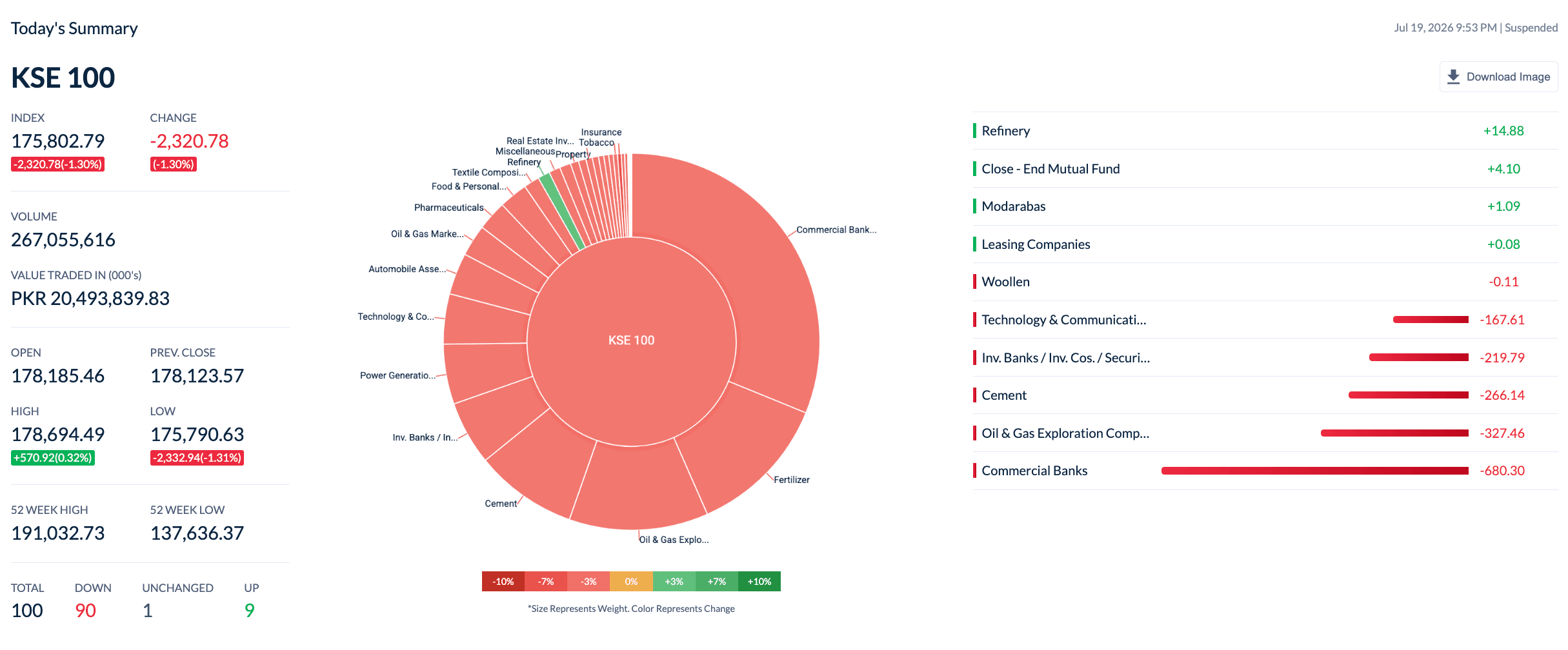
The KSE-100 Index extended its losing streak during the week, falling 3.5% (6,439 points) to close at 175,803. Investor sentiment remained under pressure as escalating geopolitical tensions in the Middle East triggered broad-based selling across the market. Concerns over higher global oil prices, inflationary pressures, and increased economic uncertainty led investors to adopt a cautious approach. Going into the new week, market direction is likely to remain closely tied to developments in the regional conflict and their impact on global commodity prices and investor confidence.
Credits: StockIntel
FUNDS IN VIEW
Who is leading Pakistan’s Asset Management industry? 📈
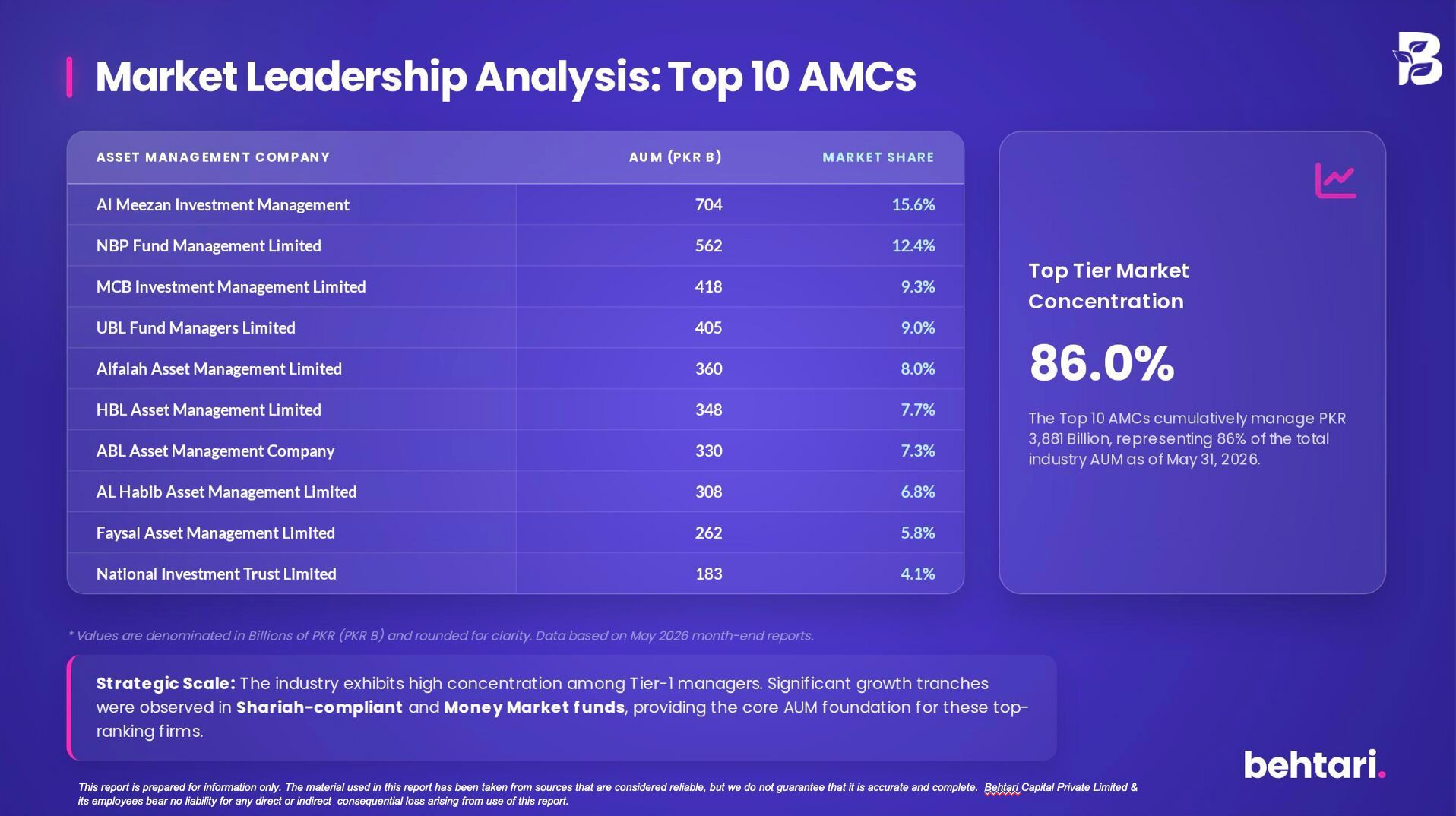
The Top 10 AMCs now control 86% of the entire market! Al Meezan Investment Management Limited takes the #1 spot with PKR 704 Billion in AUM, followed closely by NBP Fund Management Limited and MCB Funds.
Credits: Behtari
Does your investment partner make the top tier?