
Pulse
Oil Shocks and Economic Headwinds
Oil prices surge, inflation stays high, and Pakistan faces fresh economic pressures. Catch up on the week's biggest market moves, policy decisions, and developments to watch next.
Another Week, Another Pulse!
What happens when the world gets more expensive just as Pakistan tries to get its economy growing faster? Last week offered a glimpse. Oil prices surged towards $110 a barrel as the Middle East conflict intensified, Pakistan's inflation remained above 11%, and another increase in electricity bills could be on the way. Yet the government is pushing to attract investment, expand business financing and accelerate growth.
From the forces shaking global markets to the decisions shaping Pakistan's economy, here's what happened last week and what to keep an eye on next.
The Middle East Conflict Is Keeping Oil Prices on Edge
The conflict is no longer just a geopolitical story. It is becoming an economic concern for countries that depend on imported energy, including Pakistan.
Oil prices climbed sharply on Friday as attacks intensified around the Strait of Hormuz, a critical route for global oil supplies. Brent crude briefly touched $110 a barrel before closing at $109.86, up 3.7% for the day. US crude settled at $101.41. Over the week, US crude rose more than 10%, while Brent gained nearly 5%.
Iran's offer to reopen the Strait of Hormuz within seven days remains on the table, but uncertainty over the conflict continues to unsettle markets. Houthi attacks on Saudi Arabia and Ukraine's continued strikes on Russian oil refineries added to concerns about energy supplies.
The consequences extend beyond oil prices. The IMF warned that some low-income countries facing the energy shock may have little choice but to cut public spending or restructure their debt. Meanwhile, credit rating agency Fitch flagged growing debt challenges in major economies, including the US, UK and France, as government borrowing costs rise.
Pakistan's Cost-of-Living Pressure Isn't Easing
For households already managing tight budgets, the latest inflation figures offer little relief.
Pakistan's short-term inflation stood at 11.38% year-on-year in the week ended October 15. Although prices edged down 0.04% compared with the previous week, they remained substantially higher than a year earlier.
The IMF has also raised its inflation forecast for Pakistan to 9.9% for the current fiscal year, while keeping its growth forecast at 3.5%. The government, however, expects growth to exceed 4%, setting up a clear difference between the two outlooks.
Electricity bills could add to the pressure. The Power Division has projected a Rs2.56 per-unit increase in November bills through the fuel cost adjustment for September, reflecting the cost of generating electricity using more expensive fuels.
Cement prices also rose across Pakistan, adding to construction costs. Taken together, higher energy and building costs could put further pressure on households and businesses.
Pakistan Wants Faster Growth, but the Numbers Are Mixed
The government is aiming for economic growth of more than 4% this fiscal year despite high oil prices and external pressures. Finance Minister Muhammad Aurangzeb has also said the government plans to privatise five to six state-owned entities, potentially raising more than $1 billion.
But the latest industrial data show that the recovery is uneven.
Large-scale manufacturing output grew just 0.67% in August compared with a year earlier, while falling 4.96% from July. That month-on-month decline suggests industrial activity remains under pressure.
The government is also looking to support smaller businesses, directing authorities to increase financing for small and medium-sized enterprises from Rs1.1 trillion to Rs2.2 trillion by 2028. The goal is to help businesses expand, create jobs and contribute to economic growth.
The challenge will be turning these ambitions into sustained economic activity while rising energy costs weigh on businesses and consumers.
Pakistan's External Finances Face Another Test
Pakistan's current account deficit widened to $874 million in the first quarter of FY2026-27, compared with $755 million in the same period last year. In September alone, the country recorded a $356 million deficit, against a surplus of $133 million a year earlier.
The current account tracks money flowing into and out of the country through trade, services, income and transfers. A widening deficit means greater pressure on the country's external financing needs.
There was a small positive development on reserves. The State Bank of Pakistan's foreign exchange reserves rose by $16 million to $21.47 billion in the week ended October 9.
Pakistan is also seeking to revive a $1.2 billion annual oil facility from Saudi Arabia that would allow payments to be deferred. Officials discussed the proposal with the Saudi Fund for Development as both sides explored closer energy cooperation.
On the international front, Pakistan has been nominated to chair the boards of governors of both the World Bank Group and the IMF in 2027, the first time since 1953. Economic Affairs Minister Ahad Khan Cheema has been nominated to lead both boards.
Taxes, Business Costs and a Deadline to Remember
The government is stepping up efforts to bring more economic activity into the tax net. Prime Minister Shehbaz Sharif has directed the FBR to complete a digital monitoring system for sales and production in major industries by the end of December. The system is intended to help authorities identify gaps between actual and potential tax collection.
The World Bank has rated Pakistan's tax reform programme as moderately satisfactory, but warned that political and governance challenges could hinder implementation. Pakistan aims to raise its tax-to-GDP ratio to 15% by June 2030.
For taxpayers, there is a more immediate date to remember: the FBR has extended the deadline for filing 2026 income tax returns to October 31.
Meanwhile, car sales presented a mixed picture. Sales of cars, SUVs, pickups and vans fell 12% year-on-year and 3% month-on-month to 15,104 units in September. However, cumulative sales for the first quarter of FY2026-27 rose 19% to 50,480 units.
The figures suggest that the market has retained some momentum over the quarter despite a weaker September.
Digital Payments Are Expanding, and Financial Oversight Is Tightening
Pakistan's push towards digital payments continues to gain ground. The Cashless Pakistan Initiative has registered 2.03 million active digital commerce payment points, including 1.73 million merchants actively using Raast QR payments.
More merchants accepting digital payments can make everyday transactions easier and reduce reliance on cash.
At the same time, the Securities and Exchange Commission of Pakistan has approved a Corporate Intelligence Unit to identify suspected financial misconduct. Its targets include companies allegedly running Ponzi or pyramid schemes, accepting deposits or lending without licences, or operating beyond their approved business activities.
The two developments reflect parallel changes in Pakistan's financial system: wider use of digital transactions and stronger efforts to identify unauthorised financial activity.
What to Watch This Week
Oil prices and the Middle East: Any escalation or progress towards reopening the Strait of Hormuz could move energy markets.
Electricity costs: Watch for developments on the proposed fuel cost adjustment for November bills.
Tax filing deadline: October 31 is the extended deadline for filing 2026 income tax returns.
Pakistan's economic outlook: Inflation, industrial activity and external account developments will help show whether economic pressures are easing or deepening.
📅 Key Events to Watch!
📆 October 22, 2026💵 Foreign Exchange Reserves Update
📆 October 23, 2026🛒 Weekly Sensitive Price Index (SPI) Release
Note: These dates are tentative and subject to change.Credits: Pulse by Capital Stake
STOCK MARKET:
The Pakistan Stock Exchange (PSX) slipped 0.4% over the week, losing 670 points as investors remained cautious. Rising oil prices and continued geopolitical tensions weighed on sentiment, while concerns about a possible interest rate hike added to the uncertainty. With energy costs climbing and inflation still elevated, investors are watching closely for signs of what comes next for the economy and interest rates.
div align="center">
Credits: Behtari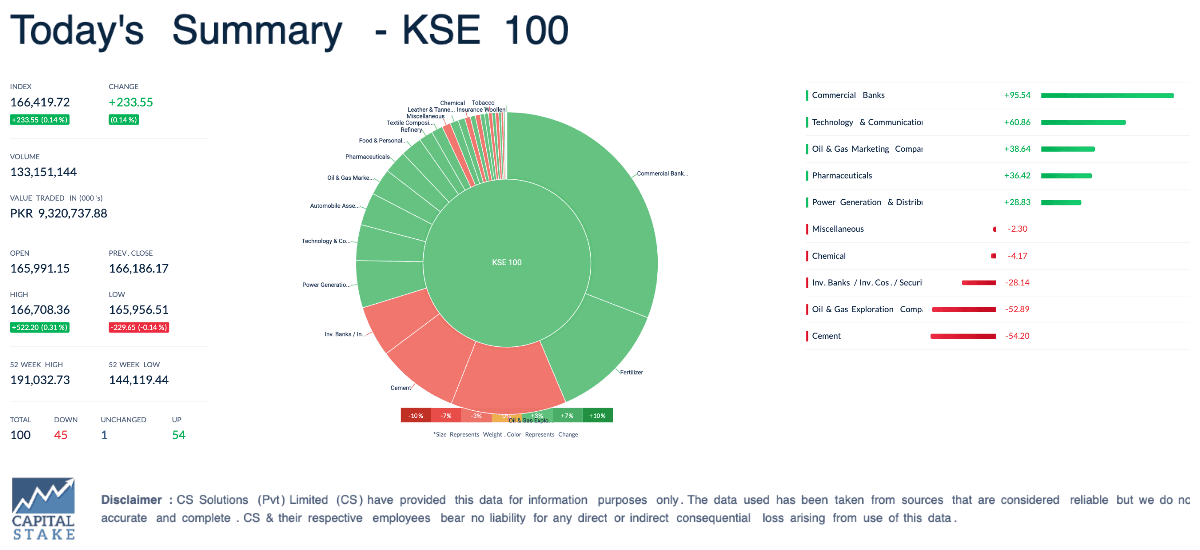
SECP Investigates SE Fruits IPO After Auditor Blunder
The SECP has initiated regulatory action over discrepancies in the IPO prospectus of SE Fruits and Vegetable Limited, which raised concerns about the accuracy of information presented to potential investors. The regulator halted the process after the book-building stage, and the company subsequently withdrew its IPO, refunding all subscription money. It plans to reapply with more detailed disclosures. The SECP is now investigating who was responsible for the irregularities. The case highlights why accurate financial disclosures matter: investors rely on a company's prospectus to understand its financial health and risks before deciding whether to invest.