
Pulse
Stability Under Pressure
This week brings a fresh set of economic indicators, with the latest foreign exchange reserves and inflation data due alongside the weekly SPI release. Markets will also be watching developments around the IMF review, global oil prices and ongoing geopolitical tensions.
Another Week, Another Pulse!
The mornings are finally starting to feel a little different as summer loosens its grip across the country. But last week, the headlines were anything but cool.
Tensions resurfaced along Pakistan's western border, inflation climbed to 11.92%, and the Iran-US standoff kept oil markets on edge. At the same time, the IMF saw progress, foreign investors showed renewed interest in local bonds, and fresh money continued to flow into Pakistan.
Here's everything you need to know.
📅 Key Events to Watch!
📆 October 1, 2026💵 Foreign Exchange Reserves Update
📆 October 1, 2026📊 CPI Inflation
📆 October 2, 2026🛒 Weekly Sensitive Price Index (SPI) Release
Note: These dates are tentative and subject to change. Credits: Pulse by Capital Stake
Pakistan's western border is heating up again
After nearly three months of relative calm, tensions between Pakistan and Afghanistan resurfaced last week.
Pakistan said it had foiled an attempted Afghan attack near Gulistan along the border, killing several members of the Afghan Taliban. The incident came days after a suicide attack at a police facility in northwestern Pakistan that killed at least 24 people.
For Pakistan, renewed tensions on the western border are something to watch closely, particularly after the relative calm of the past few months.
And then there's oil...
The Iran-US conflict continued to cast a shadow over global energy markets.
Iran offered a plan to reopen the Strait of Hormuz, a crucial route for global oil shipments, but US President Donald Trump rejected the proposal. An Iranian general subsequently said the war was not over and warned that the Strait would remain closed until US economic sanctions were lifted.
For Pakistan, this matters much closer to home.
A prolonged disruption around Hormuz could keep oil prices elevated. And when oil gets expensive, the effects don't stop at the petrol pump. Transport, electricity and the cost of moving goods can all come under pressure.
That pressure was already showing up in Pakistan's latest inflation numbers.
Inflation just crossed another uncomfortable line
Pakistan's weekly inflation climbed to 11.92% year-on-year for the week ended September 24. Higher global oil prices are adding to energy costs, but for households, inflation is much more straightforward: things cost more.
The latest jump comes just weeks after inflation moved back into double digits, keeping the cost of living firmly on the radar.
At the same time, the State Bank is trying to encourage more money to come into the country through official channels.
Pakistan wants more dollars coming through the front door
The SBP launched the Pasban Remittance Reward Scheme last week, offering Rs16 billion in annual cash prizes to encourage overseas Pakistanis to send remittances through formal banking channels.
It is essentially an attempt to make sending money through banks more attractive.
The initiative comes as Pakistan continues to rely heavily on remittances for foreign exchange, with policymakers looking to strengthen inflows through the formal financial system.
IMF Sees Progress, But the Programme Moves On
There was some positive news from Pakistan’s ongoing IMF programme.
IMF Managing Director Kristalina Georgieva expressed satisfaction with the country’s reform efforts, saying implementation had helped support macroeconomic stability. IMF discussions also moved into the next phase after the mission received briefings from Pakistani officials, including the State Bank.
Pakistan has made progress on several fiscal and monetary targets, potentially clearing the way for further programme disbursements.
There are still gaps to close.
Pakistan missed some commitments relating to education and healthcare spending and governance, while the IMF is seeking 174 legal amendments covering governance, subsidies and other programme commitments.
The latest review is therefore moving forward, but with a substantial reform agenda still on the table.
Growth Remains Modest
The Asian Development Bank kept its FY27 growth forecast for Pakistan at 3.7%, below the government’s target and among the lowest growth projections in South Asia.
The bank expects inflation to average 8.3%, while warning that higher energy and import costs, alongside prolonged geopolitical tensions, could weigh on the outlook.
There are nevertheless some encouraging movements across the external account.
SBP-held foreign exchange reserves increased marginally by $11 million to $21.4 billion in the week ended September 18.
Foreign participation in the domestic bond market also increased during the first 70 days of FY27, with investment from the UAE reaching its highest level for the period.
Foreign economic assistance rose nearly a quarter to $1.7 billion during July-August FY27 as the government resumed commercial borrowing.
Private-sector credit, however, remained subdued in the first quarter, reflecting continued caution around new investment and borrowing.
Fresh Money, Fresh Projects
Pakistan is also looking to translate renewed external interest into longer-term investment.
The government and European Union signed three grant agreements worth €65 million, covering business and investment facilitation, energy and environmental resilience in Khyber Pakhtunkhwa, and support for rule of law and the business environment.
The 1,800-kilometre ML-1 railway project also returned to the spotlight, with the Asian Development Bank and World Bank expressing interest following the withdrawal of Chinese financing. The revised estimated cost stands at around $6.8 billion.
Meanwhile, the Special Investment Facilitation Council and World Bank discussed measures to improve Pakistan’s business environment, streamline regulations and facilitate private-sector activity.
Electricity Losses Under Review
The government has ordered a comprehensive technical audit of the country’s former Wapda distribution companies.
The audit will examine the scale, causes and geographical concentration of electricity theft, along with technical and commercial losses.
The power sector remains one of Pakistan’s most persistent structural challenges, with losses, circular debt and high electricity costs continuing to weigh on consumers and businesses.
STOCK MARKET
It was another uneven week at the PSX, with investors weighing geopolitical risks against hopes of progress on the IMF front. The KSE-100 ended at 170,885, gaining 0.22% over the week after sentiment improved towards the end of the week on expectations of diplomatic engagement around the US-Iran conflict.
The IMF staff mission’s arrival in Pakistan for discussions on the country’s ongoing programmes also remained a key development for markets.
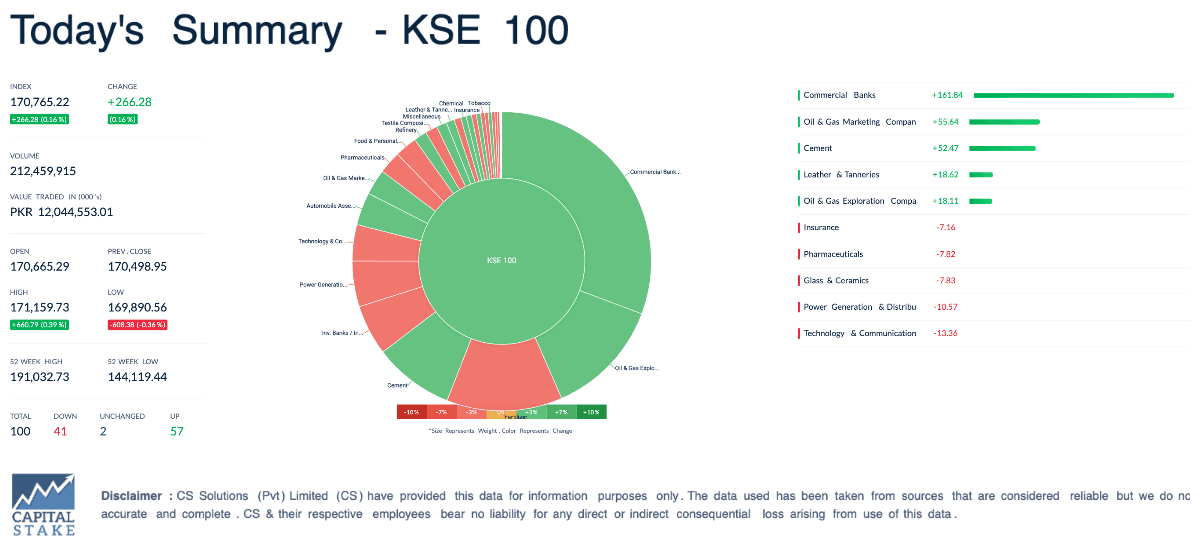
Credits: StockIntel
FUNDS IN VIEW
Fund Ranking 🏆
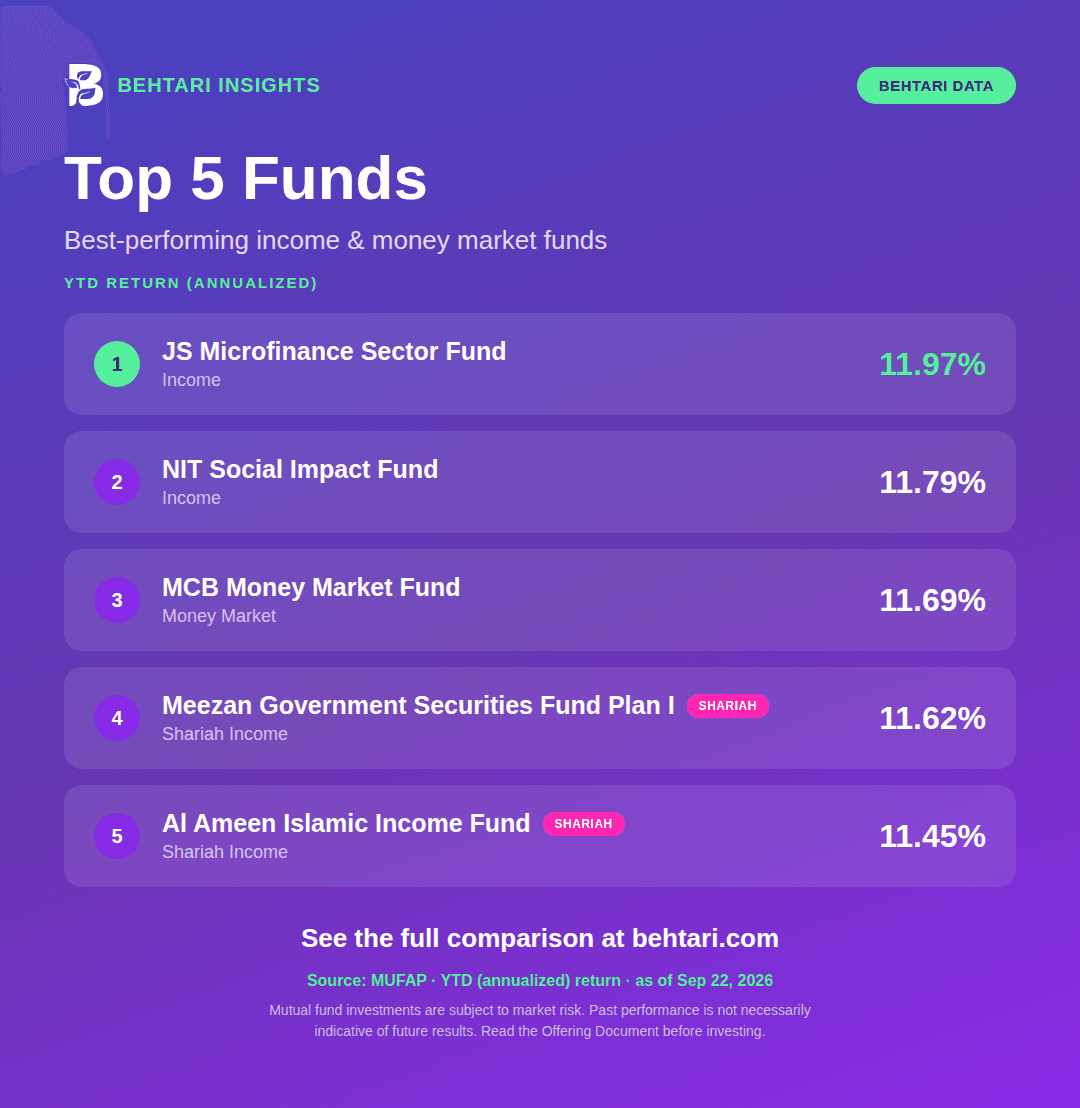
Top 5 Income and Money Market Funds this Week!
JS Microfinance Sector Fund (JS Investments) leads at 11.97%, followed by NIT Social Impact Fund (National Investment Trust Limited) at 11.79% and MCB Money Market Fund (MCB Funds) at 11.69%.
Compare the returns before you invest.
Full list at behtari.com/mutual-funds
📅 What to Watch This Week
September 30: The current deadline for Tax Year 2026 income tax returns and wealth statements. Tax practitioners have requested an extension to November 30, citing issues with the IRIS portal, load-shedding, financial constraints and workload. No extension has been announced.
IMF Review: Discussions continue as Pakistan works through the latest review and outstanding programme commitments.
Oil & Hormuz: Developments around the Iran-US conflict and the Strait of Hormuz remain a key variable for global oil prices and Pakistan’s energy costs.