Pulse
🌍 Tensions ⛽ Fuel 💹 Recovery
A quick roundup of the week's biggest economic and market developments. From easing Middle East tensions and the State Bank's interest rate decision to stock market performance, refinery reforms, and the key events to watch this week—everything you need to stay informed in one place.
Another Week, Another Pulse!
The Middle East once again dominated global headlines this week, with investors closely watching rising tensions between the United States and Iran. Fears of a wider regional conflict kept markets on edge for most of the week, as any disruption in the region could have affected global oil supplies and fuelled inflation worldwide. Markets ended the week on a more optimistic note after US President Donald Trump announced on Sunday that planned military strikes on Iran had been called off, subject to continued negotiations. While the announcement brought some relief, the situation remains fluid and investors will continue to monitor developments closely.
Despite the geopolitical uncertainty, there was some positive news for consumers. The government announced a slight reduction in petroleum prices for the first half of August, with petrol becoming cheaper by 12 paisa per litre and high-speed diesel by 66 paisa per litre. Looking ahead, OPEC+ also approved another increase in oil production from September. If global tensions continue to ease, the additional supply could help keep international oil prices stable in the coming weeks.
As widely expected, the State Bank of Pakistan kept the policy rate unchanged at 11.5%, reflecting growing confidence in the country's improving macroeconomic outlook while remaining cautious about inflation and external risks. S&P Global also expects the central bank to maintain a prudent monetary policy stance until inflation shows a more sustainable decline.
Pakistan's foreign exchange reserves fell by US$229 million during the week to US$17.03 billion, mainly due to external debt repayments. However, the country's external position received a significant boost after Saudi Arabia rolled over its US$5 billion deposit for another three years, easing pressure on foreign exchange reserves. The State Bank also confirmed that Pakistan had repaid a US$1.4 billion Chinese commercial loan, with refinancing expected in the coming weeks, ensuring that pressure on reserves is likely to remain manageable.
Inflation showed encouraging signs of moderation. The Sensitive Price Indicator (SPI), which measures short-term inflation, eased to 9.05% year-on-year, falling below the double-digit mark despite volatility in international oil markets. Meanwhile, the Federal Board of Revenue collected Rs810 billion in July, exceeding its monthly target and providing a strong start to the new fiscal year.
The government also announced several measures aimed at strengthening the economy. The Economic Coordination Committee approved more than Rs255 billion in export incentive schemes to support exporters and improve Pakistan's export competitiveness. At the same time, the Power Ministry reported that energy sector reforms had reduced circular debt by Rs779 billion, representing nearly one-third of its previous level, marking one of the most significant improvements in recent years.
Looking further ahead, Pakistan may see increased foreign investment and infrastructure development. Saudi Arabia's Falcon Vision Group has expressed interest in investing up to US$10 billion in infrastructure, construction, technology, and industrial projects, while the Asian Development Bank is expected to approve a new border connectivity and logistics programme to improve regional trade and transport infrastructure. Separately, the government is reviewing amendments to the Brownfield Refinery Policy, which could unlock billions of dollars in refinery upgrades and strengthen the country's long-term energy security.
The government also indicated that it may reintroduce targeted fuel subsidies, with support from provincial governments, if geopolitical tensions once again drive international oil prices significantly higher. At the same time, it reaffirmed its commitment to gradually deregulate petroleum prices, allowing domestic fuel prices to reflect global market movements more efficiently.
As we move into the new week, investors should keep a close eye on developments in the Middle East, global oil prices, and updates on Pakistan's external financing and investment inflows. While the easing of geopolitical tensions has improved market sentiment, inflation, energy prices, and external sector developments will continue to play a key role in shaping Pakistan's economic outlook in the weeks ahead.
📅 Key Events to Watch!
📆 August 3, 2026 📈 Consumer Price Index (CPI) Inflation Release
📆 August 6, 2026 💵 Foreign Exchange Reserves Update
📆 August 7, 2026 🛒 Weekly Sensitive Price Index (SPI) Release
Note: These dates are tentative and subject to change. Credits: Pulse by Capital Stake
STOCK MARKET
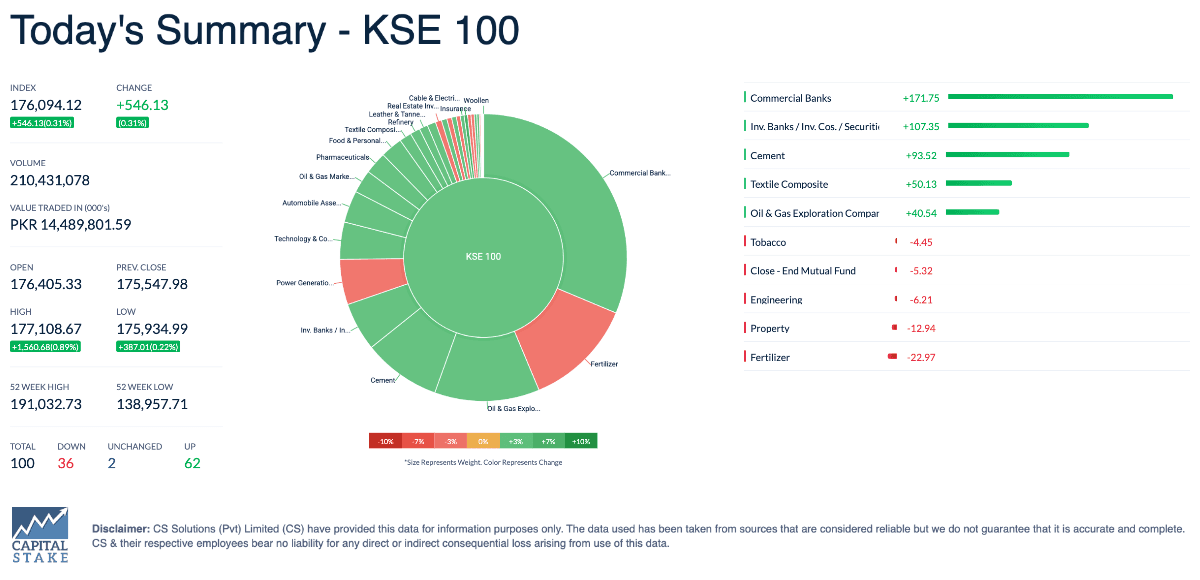
The Pakistan Stock Exchange ended July 2026 on a subdued note, with the benchmark KSE-100 Index closing at 176,094 points, down 4,208 points (2.3%) for the month. Investor sentiment remained cautious for most of July as escalating geopolitical tensions in the Middle East weighed heavily on the market.
However, the final week of the month brought a strong rebound. The KSE-100 Index gained 5,073 points (2.97%), driven by a sharp 7,241-point rally on Monday after signs of easing tensions between the United States and Iran boosted investor confidence. Although renewed uncertainty later in the week erased part of those gains, the market still ended the week in positive territory, highlighting that investor sentiment remains closely tied to geopolitical developments and global market conditions.
Credits: StockIntel
FUNDS IN VIEW
Why is Pakistan still importing billions of dollars' worth of petrol and diesel despite having local refineries? And how could refinery upgrades help reduce fuel imports, strengthen the Rupee, and create opportunities for investors?
We've broken down the government's proposed Brownfield Refinery Policy in simple terms, explaining why it matters for your everyday fuel bill, Pakistan's economy, and even equity mutual funds.
📖 Read: Your Petrol Tank Secret: Why Pakistan Spends $16 Billion Importing Fuel While Local Refineries Run at Half Speed