Pulse
The Signs of Change
Pakistan gets a ratings upgrade, foreign investors show renewed interest, and major investment projects move forward. But rising prices, wheat concerns, energy costs and ongoing IMF pressure show there’s still plenty at stake.
Another Week, Another Pulse!
It was a week that gave Pakistan something to feel good about, while also reminding us how much is still at stake. Moody’s upgraded the country’s rating, foreign investors kept buying government debt and major investment plans moved forward. But with wheat supplies under pressure, energy costs still biting and the IMF pushing back on key policies, the bigger story is far from settled.
🌍 The World: Iran Isn’t Backing Down
The week ended with Iran making it clear that the standoff is far from over.
Iran’s navy commander Shahram Irani said the country’s navy is “alive and well”, pushing back against repeated claims by US President Donald Trump that Iran’s naval forces had been destroyed. Iran’s navy has also said it maintains control over the Strait of Hormuz, keeping one of the world’s most important oil routes at the centre of the story.
Iran’s Supreme Leader Mojtaba Khamenei meanwhile urged Muslim leaders to recognise what he called their “real enemy”, understand its plans and confront it.
For markets, this matters well beyond the region. If tensions around Hormuz worsen, oil, shipping and eventually household energy costs could feel the impact.
🇵🇰 Pakistan: Moody’s Gives the Economy Some Breathing Room
Pakistan finally had some financial news worth celebrating. Moody’s upgraded the country’s sovereign rating from Caa1 to B3, with a stable outlook, citing improving external and fiscal conditions.
But there is an asterisk. Moody’s still sees meaningful risks, while international surveys continue to flag weaknesses in the rule of law, corruption control and government effectiveness.
The upgrade comes as Pakistan prepares to look west for more financing. Finance Minister Muhammad Aurangzeb told the Financial Times that the country is seeking greater US financing and preparing to return to international capital markets, with the aim of reducing reliance on bilateral debt from China.
And there is already some foreign appetite for Pakistani debt. Foreign investors put around $171 million into government securities during the first 50 days of the current fiscal year, $126.9 million into Treasury bills and $44 million into Pakistan Investment Bonds.
💰 The Economy: Your Grocery Bill Still Has a Story to Tell
The ratings upgrade may be good news for the government, but everyday costs tell a more complicated story.
Pakistan’s Sensitive Price Indicator was still 9.04% higher year-on-year for the week ended August 27. Energy costs remained a major source of pressure as disruptions around the Strait of Hormuz continued, although cheaper tomatoes and chicken helped keep the weekly increase to just 0.05%.
And gas prices are becoming another IMF battleground. The IMF wants to limit the government’s ability to reduce gas prices, warning that lower tariffs could add to the gas sector’s circular debt.
The government is considering a major change here: replacing the current slab-based gas subsidy system with a single gas price, while protecting vulnerable households through targeted social support.
Electricity has its own problem. Independent power producers using imported coal have been accused of opaque and inefficient procurement practices, with the resulting costs ultimately reaching consumers through monthly fuel price adjustments.
The government is also opening the door to foreign fuel suppliers by allowing them to establish bonded storage facilities in Pakistan at their own expense. These facilities could support both re-export and domestic supplies when global shipping routes are disrupted.
🌾 Agriculture & Trade: A Wheat Problem, and New Buyers Abroad
Pakistan’s farmers are facing a very different kind of pressure. Farmer representatives warn that the country could face a wheat shortfall of nearly three million tonnes, potentially leaving the government with a $1.2 billion import bill unless a viable support price is restored quickly enough to encourage sowing.
But while Pakistan worries about producing enough food at home, it is also looking for more markets abroad.
Pakistan and Saudi Arabia agreed to work towards increasing Pakistani agricultural and food exports to $3 billion.
Uganda has also invited Pakistani investors into its agriculture, minerals, energy and tourism sectors. The country is offering tax incentives for greenfield investments and has proposed a Pakistan-Uganda business forum and farm-visit delegation to build direct commercial links.
There was also a regional trade development with a longer term payoff. The Asian Development Bank approved a $400 million regional financing facility to modernise border crossings across the Central Asia Regional Economic Cooperation region, lower transport and logistics costs and make it easier for people and goods to move across the region. Pakistan is among the CAREC countries that could benefit from the facility.
🏗️ Investment: Big Projects Are Moving Forward
If the ratings upgrade was about confidence, several announcements this week were about where that confidence could go.
The proposed $3.5 billion Falcon Oils Refinery and Storage Complex in Dhabeji, Thatta cleared an important institutional hurdle after the CPEC Secretariat endorsed it and asked the Board of Investment to present it to the Joint Working Group on Industrial Cooperation.
Punjab is also betting on technology. Chief Minister Maryam Nawaz Sharif announced the province’s first dedicated data centre, the Punjab Data Lake, and invited Chinese technology companies, investors and infrastructure leaders to invest in Punjab.
The SECP has also sent a draft Venture Capital Bill to the Board of Investment for consultation. The goal is straightforward: make it easier for startups and technology companies to raise formal investment.
And if you want to invest yourself, the process may soon get simpler. The SECP has introduced a unified digital investor onboarding framework aimed at cutting repetitive verification, simplifying documents and setting clearer timelines for opening investor accounts.
Pakistan is also trying to make its capital markets more accessible from the investor's side. The new onboarding framework is intended to reduce repeated checks and paperwork, which could make opening an investment account less cumbersome.
📈 Markets & Money: Foreign Money In, Local Credit Under Pressure
There is an interesting split in Pakistan’s financial system right now: foreign investors are showing interest, while businesses at home are finding credit harder to access.
During the first 45 days of the current fiscal year, bank lending to the private sector continued to decline, while non-bank financial institutions faced a liquidity crunch.
The government is meanwhile pulling more businesses into the tax net. More than 17,300 large retailers and businesses were integrated during the last fiscal year — almost one-third more than before. The next challenge is keeping that base in place as the new small-trader scheme comes into effect.
Pakistan’s total liquid foreign exchange reserves also edged up to $22.59 billion for the week ended August 21, according to the State Bank of Pakistan. It is a modest improvement, but every extra dollar of cushion matters while the country works to strengthen its external position.
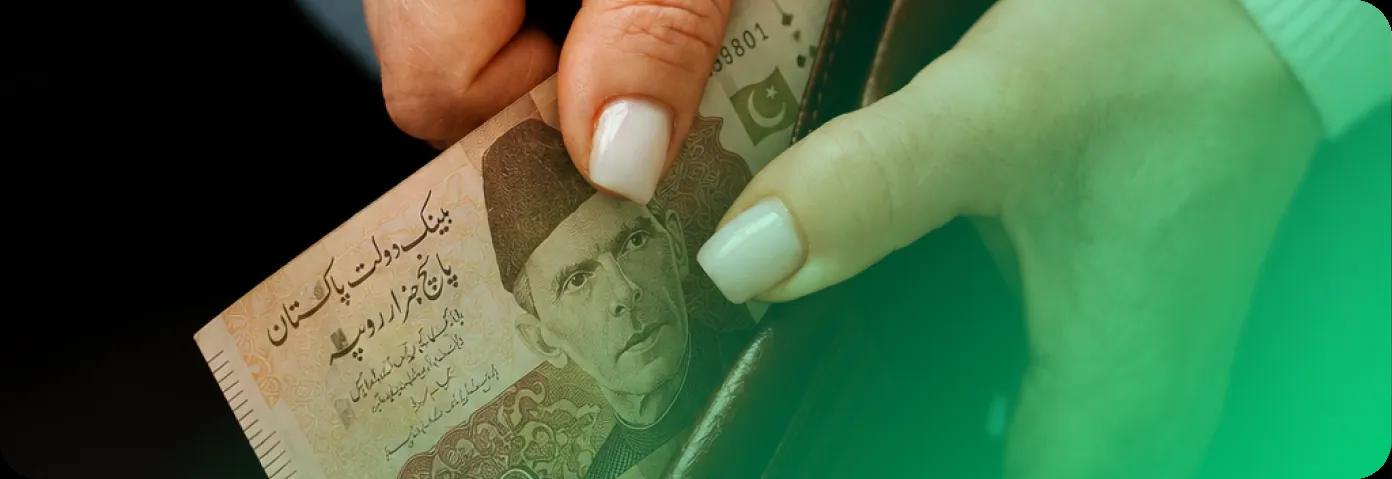
And there may soon be a small change in your wallet. The SBP is considering phasing out the Rs10 banknote because of rising printing costs, while a redesigned Rs5,000 note is being prepared to make counterfeiting harder.
🏛️ Policy Watch: A Lot Is Changing Behind the Scenes
Some of the week’s most important developments were less visible, but could shape how Pakistan does business in the future.
Pakistan and the IMF continued to disagree over contracts awarded by state-owned enterprises without competitive bidding. The IMF allows negotiated contracts only in exceptional circumstances and wants the reasons for those deals disclosed.
The government is also considering changes to the drug pricing framework, with the aim of strengthening oversight of medicine price increases and protecting consumers from unjustified costs.
Pakistan is also moving in a new direction on digital assets. According to PVARA Chairman, the country has moved from restricting virtual assets towards building a dedicated regulatory framework for the sector.
Then there is the Roosevelt Hotel in New York. Pakistan has formed a negotiation committee to settle a dispute with the hotel’s trade union, which won an award of at least $35 million. The dispute could complicate plans involving the US General Services Administration and the proposed joint venture for the hotel.
Finally, the government pushed back against reports that the 4,500 MW power-generation component of the Diamer Bhasha Dam had been dropped. Power Division and WAPDA said no such decision had been taken and that the project remains part of Pakistan’s Indicative Generation Capacity Expansion Plan.
Pakistan is also preparing for a regional security meeting. Türkiye, Pakistan and Saudi Arabia are due to hold the first meeting of the Strategic Political and Defence Committee created under the Makkah Joint Defence Agreement in Istanbul.
📅 Key Events to Watch!
📆 September 01, 2026📊 CPI Inflation
📆 September 03, 2026💵 Foreign Exchange Reserves Update
📆 September 04, 2026🛒 Weekly Sensitive Price Index (SPI) Release
Note: These dates are tentative and subject to change. Credits: Pulse by Capital Stake
STOCK MARKET
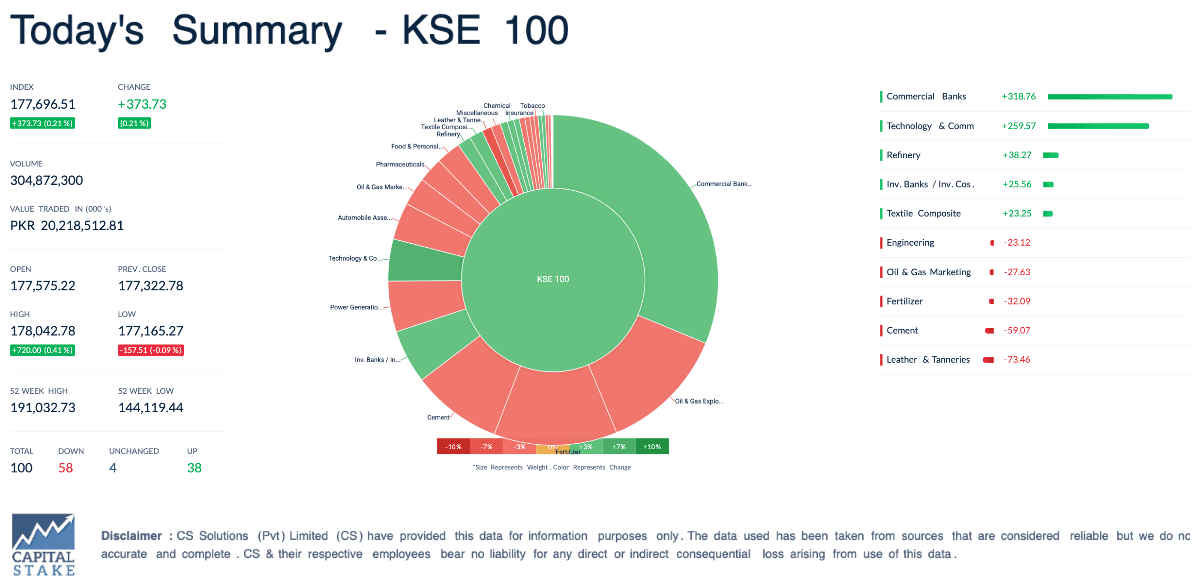
The Pakistan Stock Exchange had a fairly quiet week, with the KSE 100 Index ending at 177,697, up 530 points or 0.3% week on week. Investors remained cautious as markets watched for signs of progress in easing the US Iran standoff and reopening the Strait of Hormuz to shipping. A public holiday on Wednesday also kept trading activity lighter than usual.
Credits: StockIntel
24/7 Automated Investor Account Opening Service Coming to Pakistan
Opening an investment account could soon become much easier. The SECP is moving towards 24/7 automated investor account opening, allowing identity and banking details already verified by regulated financial institutions to be reused instead of asking investors to submit the same information repeatedly. The aim is simple: less paperwork, fewer delays and a faster route into Pakistan’s capital markets. The next step is putting the new system into operation.
FUNDS IN VIEW:
Where is Pakistan investing? 🇵🇰
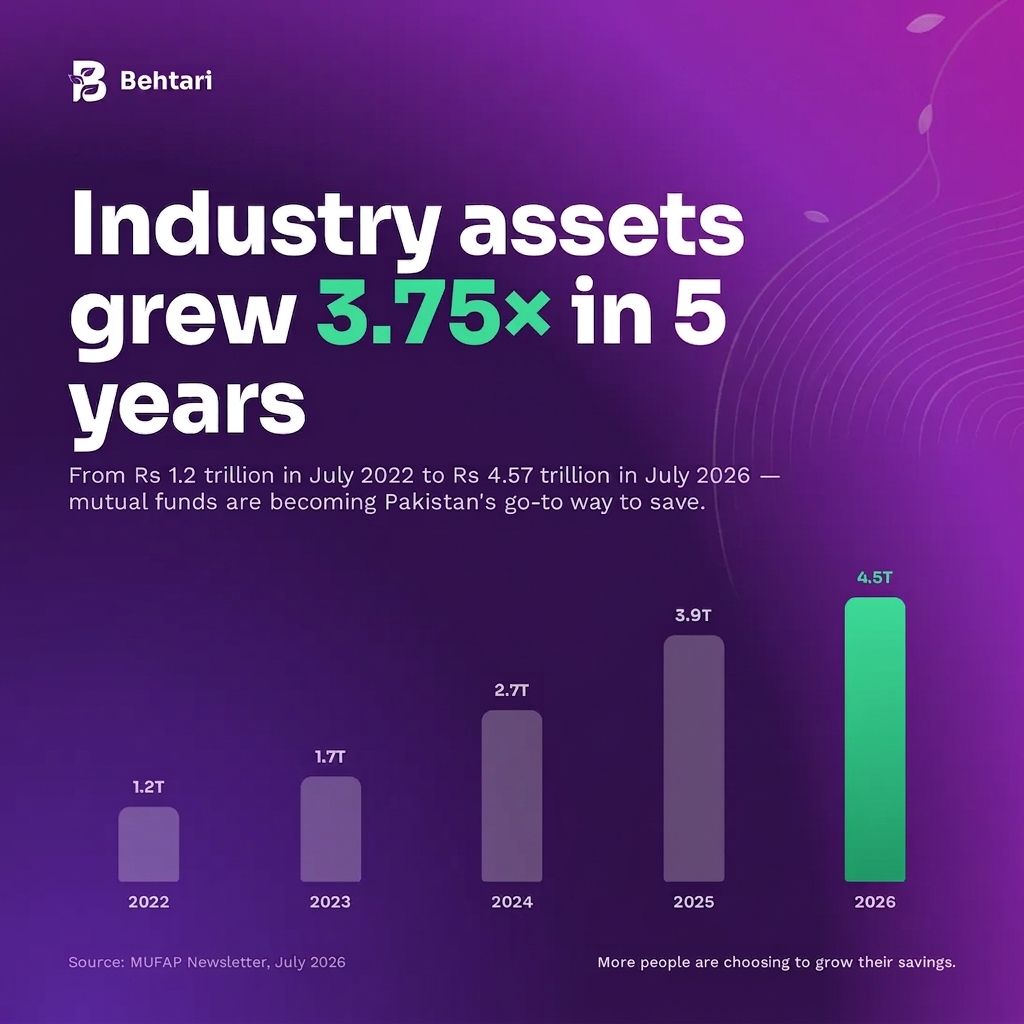
Mutual Funds Association of Pakistan (MUFAP’s) latest report shows the Mutual Fund industry grew 3.75x in just 5 years.
What was Rs 1.2T five years ago is now Rs 4.57T.
Are you following suit, or is your money still tucked under your mattress? 💸
What Matters Next Week?
So, what should you actually watch next week?
Iran and the Strait of Hormuz — because another escalation could quickly show up in oil prices, shipping costs and inflation.
The IMF talks — especially gas pricing, government contracts and the growing circular debt problem.
Foreign financing — Pakistan’s push to return to international capital markets and attract more US financing.
Wheat and food prices — a potential three-million-tonne wheat gap is too large to ignore.
Investment — from the Falcon refinery and Punjab Data Lake to the proposed venture-capital framework.
The capital markets — as foreign investors continue buying government debt and the SECP makes investor onboarding easier.
For now, Pakistan’s story is moving in two directions at once: more confidence from investors and rating agencies, but plenty of unfinished work at home.