


Pulse
Inflation, Energy & Billion-Dollar Deals
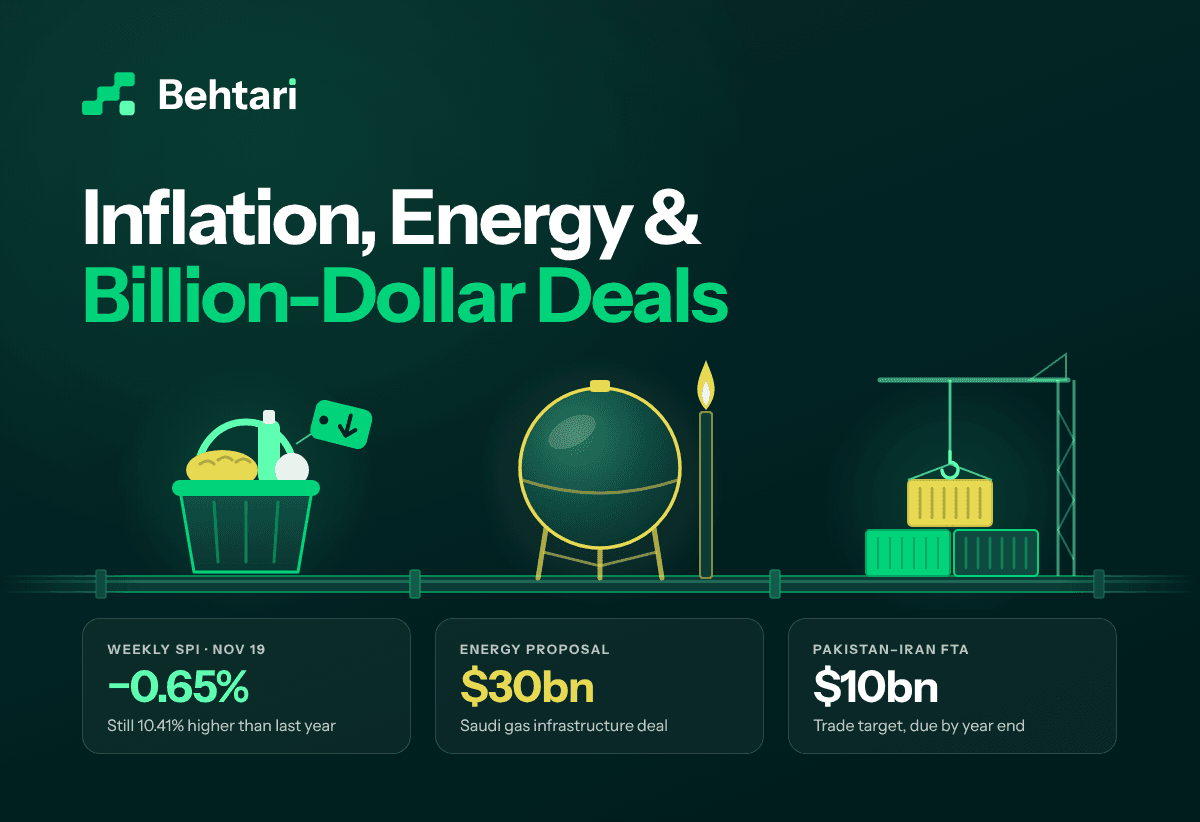
This week’s Pulse covers easing inflation, Pakistan’s $30 billion energy proposal, new trade opportunities with Iran and Oman, and the economic challenges shaping the road ahead.
Another Week, Another Pulse!
A possible $30 billion energy investment, a long-awaited trade agreement with Iran and some relief in weekly inflation figures. Last week brought big developments for Pakistan, but not all the news was encouraging. From the cost of living to the country's economic outlook, there was plenty worth paying attention to.
Let's take a look at what happened and what it could mean for the week ahead.
📅 Key Events to Watch!
📆 November 26, 2026
💵 Foreign Exchange Reserves Update
📆 November 27, 2026
🛒 Weekly Sensitive Price Index (SPI) Release
Note: These dates are tentative and subject to change.
Credits: Pulse by Capital Stake
1. Inflation Eases, But the Relief May Not Last
Pakistan saw a slight dip in weekly inflation, offering some relief after months of rising prices. The Sensitive Price Indicator (SPI), which tracks the prices of commonly purchased household items, fell by 0.65% in the week ending November 19.
However, prices were still 10.41% higher than the same week last year. So while there was a small week-on-week decline, the overall cost of living remains considerably higher than it was a year ago.
The State Bank of Pakistan (SBP) expects inflation to gradually ease towards its target of 5–7% during FY27. Standard Chartered, however, has a more cautious outlook. It warned that international oil prices could remain between $90 and $100 per barrel through December 2027, potentially keeping inflation in double digits and pushing Pakistan's interest rate to 13% by June 2027.
Higher oil prices can make fuel, transportation and production more expensive, eventually adding to the cost of everyday goods.
The SBP's annual report also looked back at how rising energy prices affected the economy during FY26. The surge in global oil prices following the Middle East conflict prompted the central bank to increase its policy rate by one percentage point in April 2026 to contain inflationary pressures.
Meanwhile, the government has recommended importing up to 800,000 tonnes of additional wheat to maintain domestic supplies and prevent flour prices from climbing further.
2. Pakistan's Economy: Signs of Improvement, But Risks Remain
Pakistan's external financial position showed some improvement last month, although international institutions continue to flag potential challenges ahead.
The country's current account returned to a surplus of $39 million in October, reversing the $371 million deficit recorded in September. Higher remittances from overseas Pakistanis and a narrower trade deficit helped drive the improvement.
Foreign exchange reserves held by the SBP also increased by $15 million, reaching $21.587 billion in the week ending November 13. These reserves provide Pakistan with the foreign currency needed to pay for imports and meet international obligations.
However, the IMF warned that Pakistan could face pressure on its finances over the coming years if imports continue to rise and the growth in remittances slows down.
Another development worth noting was the $1.16 billion that foreign investors sent out of Pakistan in profits and dividends during the first four months of FY27. China, the UK, the Netherlands and the US accounted for most of these payments. These are earnings made by foreign investors on their investments in Pakistan and transferred back to their home countries.
Looking ahead, the SBP expects Pakistan's economy to grow by 3.5–4.5% during FY27, with the current account deficit projected to remain between 0–1% of GDP.
3. A $30 Billion Energy Proposal and New Trade Prospects
Pakistan's energy sector saw some major developments last week, with potential investments and new international partnerships making headlines.
Saudi Arabia's Delta Energy Saudi signed an agreement with Pakistan's Inter State Gas Systems to explore the development of energy infrastructure, with a proposed investment of approximately $30 billion.
The broader programme involves exploring new gas supply routes across Pakistan, linking the country's western border with Gwadar and potentially extending towards India. If developed, the project could strengthen Pakistan's energy infrastructure and create new regional supply connections.
Pakistan also strengthened its energy ties with Oman. Pakistan State Oil (PSO) signed a petroleum supply agreement with Oman's OQ Trading. The agreement includes a $200 million credit facility, giving PSO additional financial flexibility when purchasing fuel.
On the trade front, Pakistan and Iran are close to finalising their long-pending Free Trade Agreement (FTA), with completion expected by the end of this year. The proposed agreement, associated with a $10 billion trade target, could create more opportunities for businesses in both countries by making cross-border trade easier.
4. The Government's Pension Bill Crosses Rs1 Trillion
Pakistan's growing pension expenses are putting increasing pressure on government finances.
The Asian Development Bank (ADB) approved a $500 million results-based loan to support reforms in the federal government's pension system. Annual pension spending has now crossed Rs1 trillion and has increased nearly fivefold since FY16.
The proposed reforms aim to make the pension system more sustainable and bring the government's long-term expenses under better control.
With pension payments taking up an increasingly large share of public spending, reforming the system has become an important part of managing the country's finances.
5. Five Banks Dominate Pakistan's Financial Sector
Pakistan's banking sector remains heavily concentrated, with a small number of major banks holding a significant share of the industry's assets.
According to the SBP, just five large banks hold 57.3% of total banking sector assets and account for 95% of investments in government securities.
The concentration is also part of a wider concern raised by the World Bank, which warned that Pakistan faces financial sector risks due to the government's heavy reliance on local banks for borrowing, economic imbalances and relatively underdeveloped financial markets.
Meanwhile, the country's industrial sector recorded modest growth. Large-scale manufacturing increased by just 2.07% during the first quarter of FY27. This covers major industries such as textiles, cement, automobiles and food manufacturing, suggesting that industrial activity continues to expand but at a slow pace.
In a separate development, the Securities and Exchange Commission of Pakistan (SECP) advised companies to verify the Unique Document Identification Number (UDIN) on their auditors' reports before submitting audited financial statements. The measure is intended to help ensure that audit reports are properly verified.
6. Trump Wants a Permanent Nuclear Deal with Iran
Tensions surrounding Iran remain an important development for global markets and the wider region.
US President Donald Trump said he wants a permanent agreement with Iran that would prevent the country from developing nuclear weapons. Speaking to Fox News, he argued that any future agreement should remain binding regardless of who becomes the next US president.
Trump's comments reflect Washington's push for a long-term nuclear agreement with Tehran, although the possibility of reaching one remains uncertain.
For Pakistan, developments in the Gulf and wider Middle East are particularly important. Any escalation in regional tensions could affect international oil prices, energy supplies and the country's import bill.
STOCK MARKET
Pakistan's stock market lost some ground last week as investors remained cautious amid political uncertainty and geopolitical tensions.
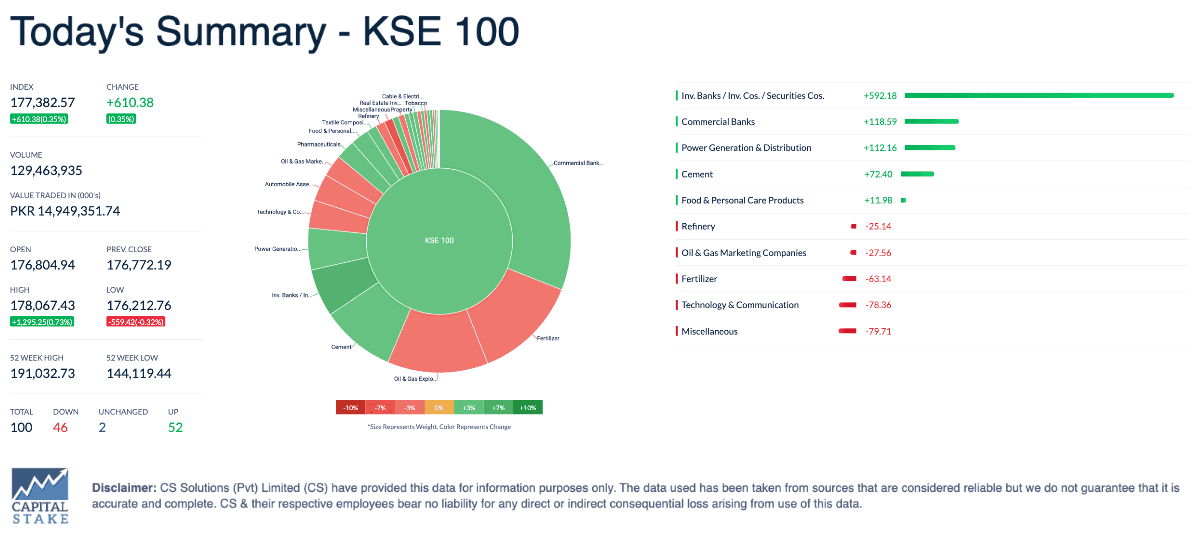
The KSE-100 Index closed at 177,382 points on November 20, down 491 points (0.28%) from the previous week's close of 177,874 points.
Selling pressure was particularly visible in banking, cement and oil and gas exploration stocks. Gains in fertilizer, power and investment companies helped limit the overall decline, but were not enough to push the market into positive territory.
Overall, it was a slightly weaker week for the stock market, with investors keeping a close watch on political and global developments.
Credits: StockIntel
That's a wrap for this week's Pulse!
From the cost of living and government spending to major energy proposals and international trade, last week brought a mix of opportunities and challenges for Pakistan. Some developments offer reasons for optimism, while others show just how much work remains ahead.
We'll be keeping an eye on how these stories unfold. See you in the next Pulse!