
Pulse
📈 Oil 💰 IMF ⚖️ Markets
Pakistan’s economy moved under the weight of global oil shocks, IMF linked reforms, and rising inflation pressures, while markets and key indicators showed selective resilience across banking, manufacturing, and digital finance.
Another Week, Another Pulse!
From petrol shocks to IMF negotiations, the past week felt like Pakistan’s economy was reacting to every global headline in real time.
The government raised petrol prices by Rs14.92 per litre and high speed diesel by Rs15, immediately dragging inflation fears back into the market. But unlike previous increases, this wasn’t entirely a domestic story. Rising tensions involving Iran, Israel, and the United States pushed global oil markets into uncertainty once again, with the Strait of Hormuz suddenly returning to the centre of global attention. Even Qatar publicly warned Iran against using the route as geopolitical leverage, a reminder of how fragile energy markets become when conflict enters the Gulf.
For Pakistan, higher oil prices arrive with consequences almost instantly. Import costs rise, transport becomes more expensive, inflation expectations strengthen, and pressure on the rupee quietly builds in the background. That pressure already appears to be surfacing.
Pakistan’s monthly trade deficit surged to nearly $4 billion in April 2026, the highest level in 46 months. The timing could hardly be worse. The external sector was already operating under strain before geopolitical tensions intensified, and any sustained increase in oil prices risks widening the gap further between imports and exports.
Then came another revealing statement from the State Bank. SBP Governor Jameel Ahmad disclosed that the central bank purchased $27 billion from the local market over the last three and a half years to build reserves. Beneath the headline sat a much larger reality. Reserves may have stabilised, but export growth still hasn’t expanded enough to sustainably support the country’s external position.
The IMF, meanwhile, remained everywhere.
Pakistan secured approval for another $1.32 billion under its ongoing reform programme, while discussions simultaneously began around the upcoming federal budget and nearly Rs230 billion in additional taxation measures expected to be introduced.
The government also signalled a gradual shift away from broad electricity subsidies toward more targeted support through BISP. Despite that longer term direction, consumers are still expected to receive temporary relief of Rs1.75 per unit over the next three months due to lower power sector costs.
Inflation, meanwhile, has started creeping back into focus. Pakistan’s Sensitive Price Indicator rose 14.52% year on year, largely driven by higher fuel and commodity prices following tensions in the Middle East.
Still, parts of the economy continued showing resilience.
The banking sector expanded strongly during CY25, while large scale manufacturing posted positive annual growth in March 2026, suggesting industrial activity is slowly recovering despite continued volatility.
Digital payments also continued growing rapidly, with RAAST transactions nearing Rs50 trillion in 2025. At the same time, Roshan Digital Account inflows crossed $12.7 billion, highlighting continued overseas Pakistani participation despite broader economic uncertainty.
The government also approved the next phase of its electric vehicle programme focused on bikes, loaders, and rickshaws, signalling increasing attention toward reducing long term fuel dependence.
The ECC also approved a Rs. 100 million technical supplementary grant for the Cannabis Control and Regulatory Authority to support renovation and initial operational work after taking over the building previously used by the defunct Pakistan Council for Renewable Energy Technologies. It’s a small but notable administrative step as the regulatory framework for a new sector begins to take shape.
Going into next week, markets will remain focused on oil prices, IMF linked budget developments, and pressure on the rupee as geopolitical tensions continue shaping economic expectations globally and locally.
*� Key Events This Week
📌 14 May 2026 💱 Foreign Exchange Reserves Update
📌 15 May 2026 📊 Weekly SPI Data Release
📌 18 May 2026 🏦 Loans to Private Sector Business Data Release 📤 Export Receipts Data Release 📥 Import Payments Data Release
Credits: Pulse by Capital Stake
STOCK MARKET
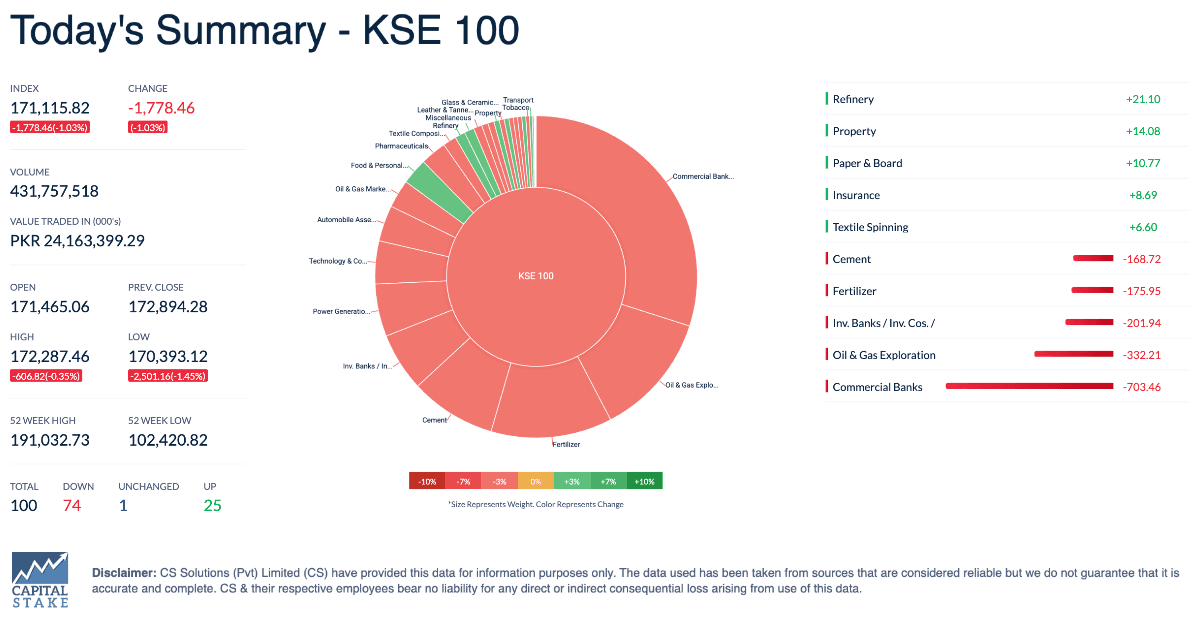
The stock market ended the week strongly, with the KSE 100 rising about 5 percent to close at 171,116, driven mainly by easing geopolitical fears after signals of reduced US Iran tensions that improved overall risk sentiment. Confidence was further supported by the IMF approving $1.2 billion in loan tranches for Pakistan, reinforcing external financing stability, while a slight $23 million increase in State Bank reserves to $15.8 billion added to the steadying outlook. Overall, gains were largely sentiment driven, supported by improved external and geopolitical cues rather than domestic fundamentals.
Credits: StockIntel
FUNDS IN VIEW
Capital Market Development Fund established to strengthen Pakistan’s capital markets
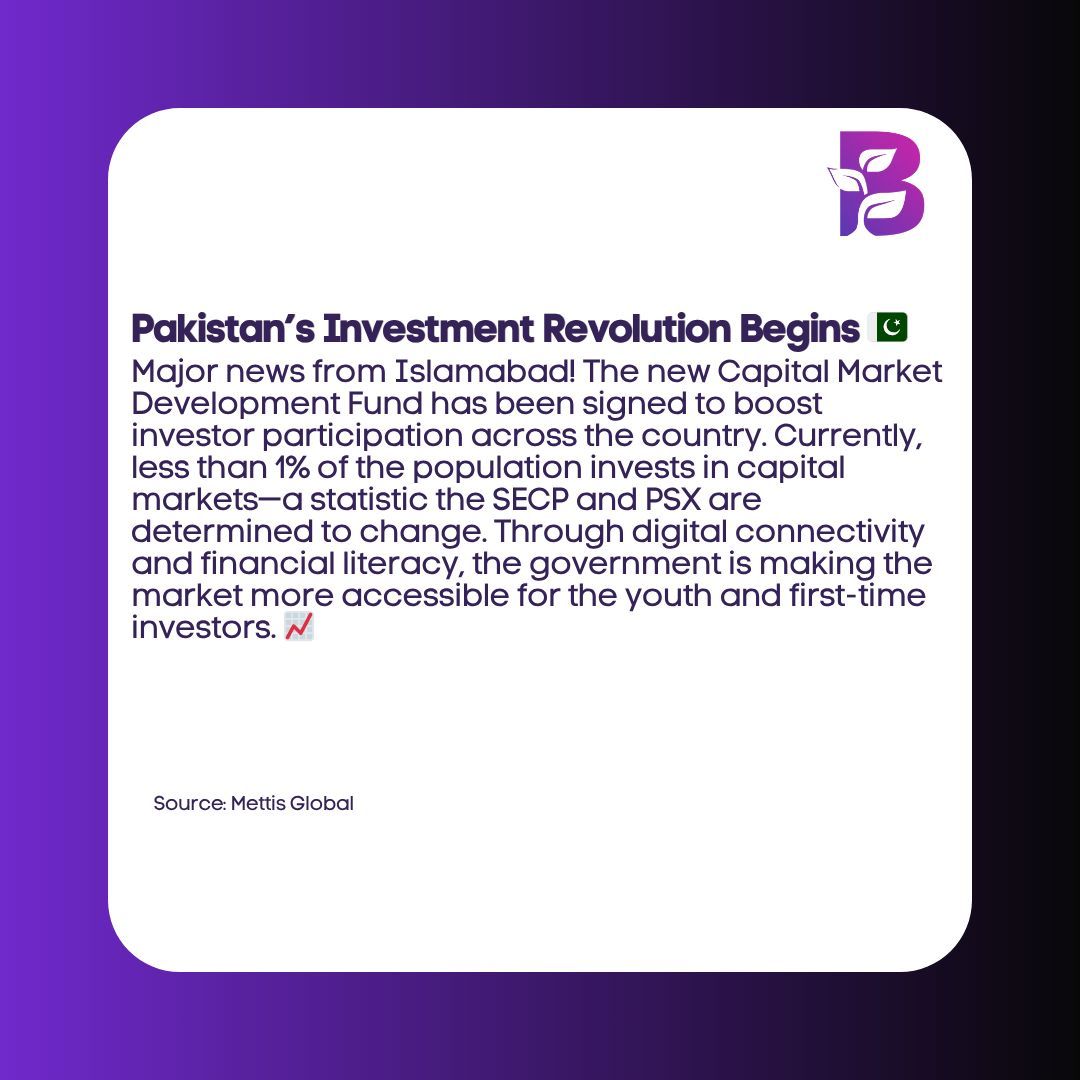
Pakistan’s capital market institutions have launched the Capital Market Development Fund to boost financial literacy, expand retail investor participation, and strengthen market infrastructure through coordinated industry funding under SECP oversight. The move is aimed at broadening a very small investor base and mobilising domestic savings to reduce reliance on external financing. Going forward, the focus will be on execution through improved onboarding, simplified entry processes, and wider investor awareness to bring more individuals into the market.
Credits: Behtari
Money Managers Ask Govt to Make Savings Market Attractive for Local Investors
Mutual fund industry representatives urged the government to make savings instruments more attractive for local investors during pre-budget discussions, calling for reforms to improve returns, expand investment products, and better align National Savings Schemes with market based options. The focus was on increasing retail participation and strengthening domestic savings mobilisation through deeper financial markets. These proposals are expected to be considered in Budget 2026–27, with policy direction likely moving toward broader retail access and more market linked savings instruments.